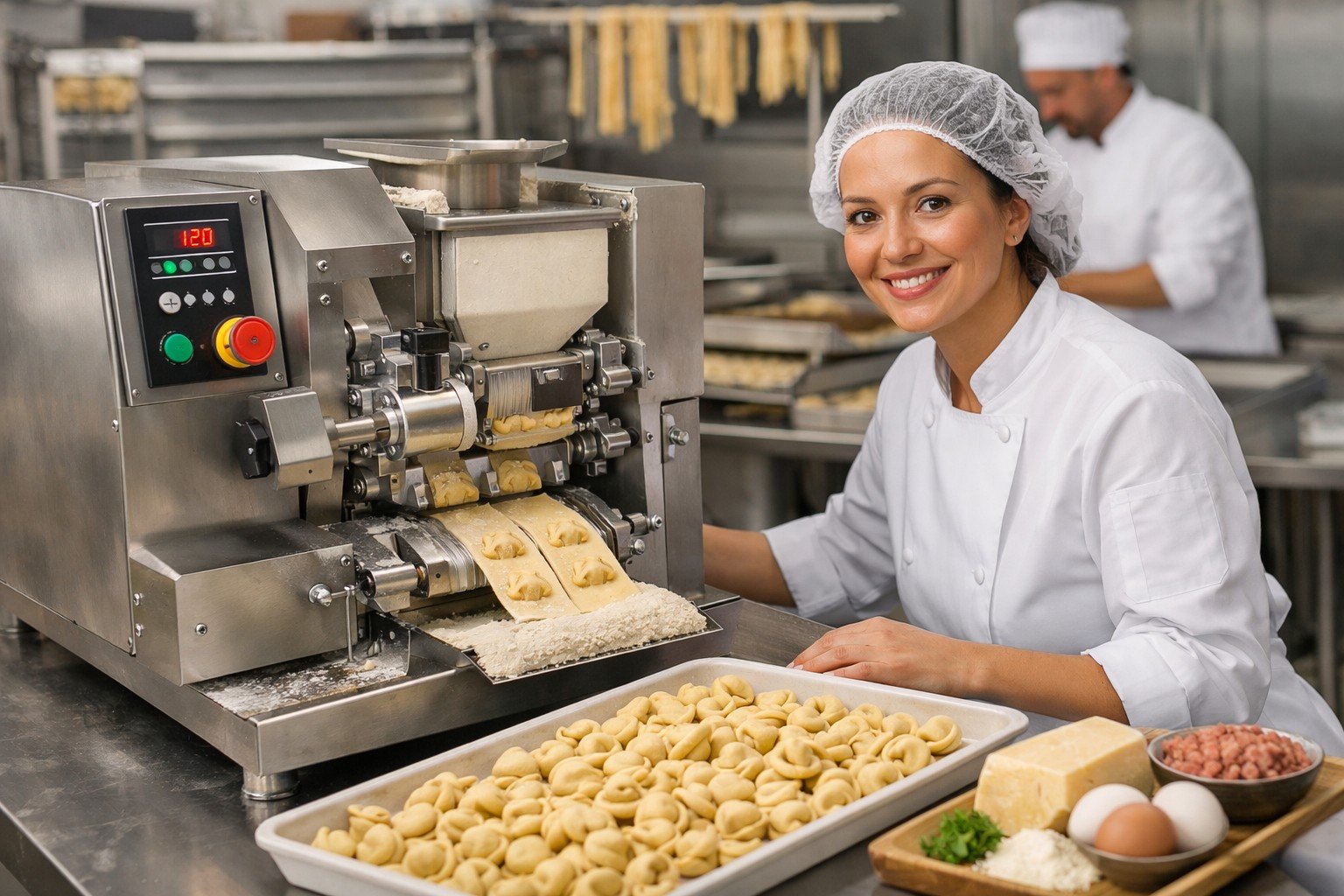
In the world of Italian cuisine, few tools bridge tradition and technology as beautifully as the Tortellinatrice. This specialized device has redefined the way tortellini — the iconic ring-shaped stuffed pasta — is produced, whether in bustling restaurant kitchens, artisanal pasta workshops, or even home cooking environments. In this comprehensive guide, we’ll explore everything you need to know about the Tortellinatrice — from what it is and how it works to its benefits, types, features, and how to choose the right one for your needs.
What Is a Tortellinatrice?
Tortellinatrice is a pasta-making machine specifically engineered to automate the production of tortellini and other similar stuffed pastas. Unlike standard pasta rollers or manual tools, the Tortellinatrice handles multiple steps in one streamlined process — including dough sheeting, filling insertion, folding, sealing, and cutting — with precision and speed.
The name itself stems from Italian: “tortellini” denotes the pasta, and the suffix “-atrice” implies a machine that performs a task. Put simply, the Tortellinatrice means “tortellini maker.”
The Evolution of Tortellini Production
Traditionally, tortellini was laboriously shaped by skilled pasta makers using hand techniques passed down through generations in regions such as Bologna and Modena. This artisanal process — while rich in heritage — demands patience, precision, and hours of painstaking effort.
As demand for fresh pasta grew, especially in professional kitchens and commercial food production, manual methods struggled to keep up without compromising consistency. The result? The emergence of the Tortellinatrice — marrying the art of pasta making with modern mechanical efficiency.
How a Tortellinatrice Works
A Tortellinatrice moves through several key steps to transform dough and filling into perfect tortellini:
- Dough Sheeting: Fresh pasta dough feeds into rollers that flatten it into thin, uniform sheets.
- Filling Deposition: A filling unit deposits measured amounts of chosen fillings — from classic meat and cheese to creative vegetable blends — onto the dough sheet.
- Folding & Shaping: The machine folds the dough around each parcel of filling and seals the edges, mimicking traditional hand techniques.
- Cutting & Output: Finished tortellini are cut to size and ejected for drying, cooking, or further processing.
This seamless workflow ensures each tortellini matches the desired size, shape, and filling distribution — something nearly impossible to achieve manually at high volumes.
Key Benefits of Using a Tortellinatrice
1. Exceptional Consistency and Quality
One of the most significant advantages of the Tortellinatrice is its ability to produce tortellini that are identical in size, thickness, and weight. This uniformity ensures even cooking times and enhances presentation — essential for restaurants, caterers, and packaged food producers.
2. Time and Labor Savings
Hand-shaping tortellini can take hours, even for experienced cooks. A Tortellinatrice drastically reduces this time, producing hundreds or even thousands of pieces in a fraction of the time.
3. Hygienic and Food-Safe Production
Most Tortellinatrice machines use food-grade stainless steel and are designed for easy cleaning and sanitation — a must in commercial food environments.
4. Versatility and Customization
Modern Tortellinatrice units feature adjustable molds and settings, allowing chefs to experiment with different pasta shapes, dough types, and filling styles — from gluten-free doughs to gourmet fusion creations.
5. Scalability Across Operations
Whether producing for a small trattoria or a large pasta factory, the Tortellinatrice adapts to varying scales of production — making it suitable for virtually any kitchen size or production goal.
Types of Tortellinatrice Machines
Not all Tortellinatrice machines are created equal. Choosing the right type depends on your production needs:
Manual Tortellinatrice
Ideal for small kitchens and home chefs, these hand-cranked machines offer a more hands-on experience. They provide control without the need for electricity but are best suited to lower volumes.
Semi-Automatic Tortellinatrice
Blending manual involvement with automated features, semi-automatic models are a sweet spot for small pasta shops wanting consistent quality without full automation.
Fully Automatic Tortellinatrice
For commercial kitchens and industrial pasta production, fully automatic machines handle continuous production with minimal supervision. These units often come with digital controls, programmable settings, and integration with broader pasta processing lines.
Essential Features to Look For
When selecting a Tortellinatrice, consider the following:
- Adjustable Rollers and Molds: Let you control pasta thickness and size.
- Digital Control Panels: Provide ease of operation and fine-tuned settings adjustments.
- Stainless Steel Construction: Enhances hygiene and durability.
- Easy Disassembly: Simplifies cleaning and maintenance.
High-end models may also feature automatic lubrication systems and safety sensors for optimized performance.
Who Uses a Tortellinatrice?
The Tortellinatrice serves a broad range of pasta lovers and professionals:
- Home Cooks & Enthusiasts: Add convenience and consistency to homemade pasta nights.
- Restaurants & Trattorie: Meet menu demand with uniform quality and faster production.
- Artisanal Pasta Shops: Scale boutique operations without sacrificing flavor or texture.
- Commercial Manufacturers: Produce packaged tortellini at industrial volumes.
- Culinary Schools: Teach both traditional dough skills and modern production techniques.
Maintenance and Best Practices
Maintaining your Tortellinatrice is essential for consistent performance:
- Clean all food-contact parts daily to prevent dough buildup.
- Inspect moving components regularly and replace worn parts.
- Apply food-grade lubricants to mechanical parts as recommended.
- Follow manufacturer safety guidelines.
Proper maintenance not only extends the machine’s lifespan but also ensures optimal hygiene and product quality.
Conclusion: Why a Tortellinatrice Matters
In today’s culinary landscape, the Tortellinatrice stands as a testament to how tradition and technology can coexist. It preserves the charm of authentic, handmade pasta while providing the efficiency, consistency, and scalability modern kitchens demand.
Whether you’re a passionate home cook or a professional pasta producer, a Tortellinatrice can transform your approach to making tortellini — blending heritage, craftsmanship, and innovation into every batch.
Let every plate tell a story of tradition reinvented and taste perfected.