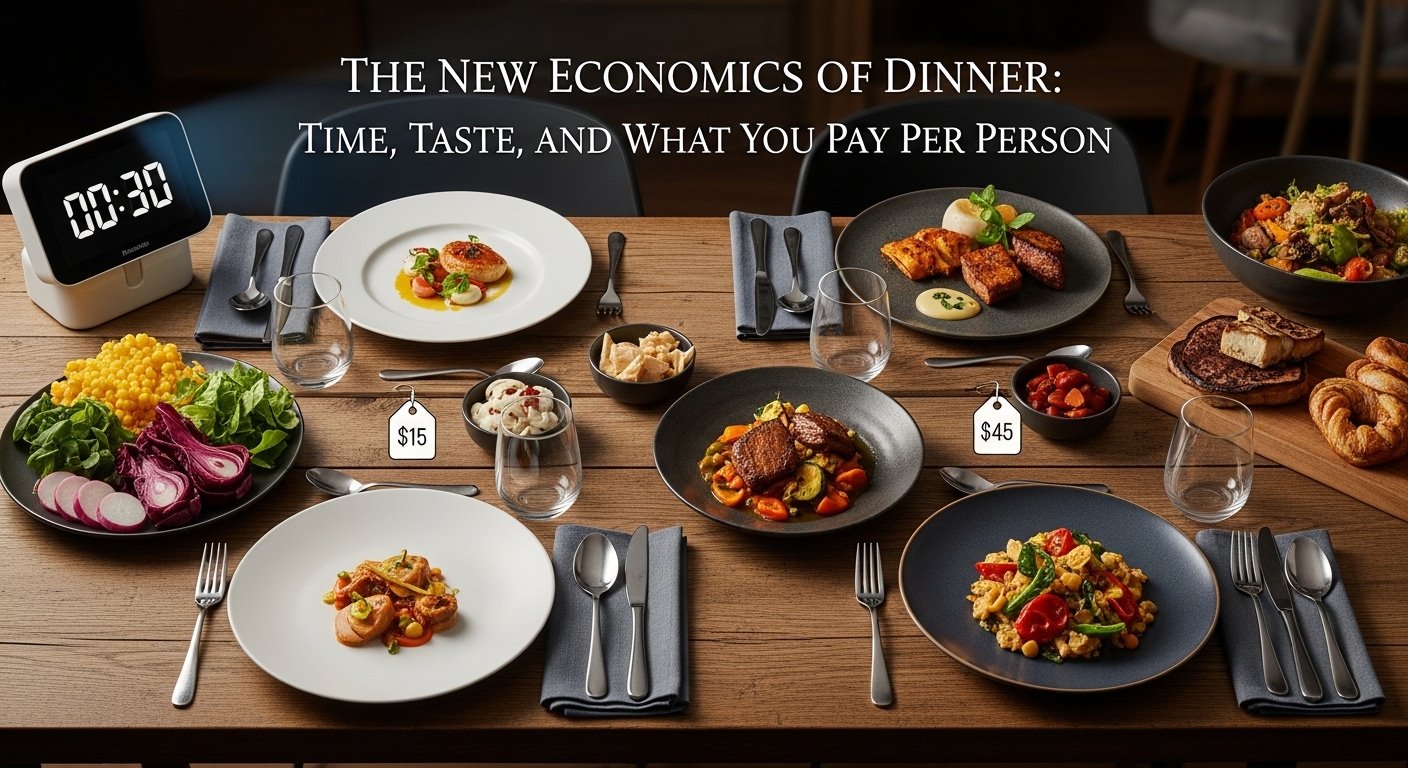
Dinner used to be simple. You either cooked at home or went out. Somewhere along the way, that choice quietly exploded into a dozen micro-decisions: scroll through delivery apps, calculate service fees, argue over what sounds least disappointing, or stare into the fridge hoping inspiration strikes.
Today, dinner isn’t just about food. It’s about time, energy, and a creeping sense that even “easy” options aren’t actually easy anymore.
And whether we realize it or not, we’re all doing the same math in our heads: Is this worth it?
When “Convenient” Stopped Feeling Convenient
Restaurants promise an experience but come with reservations, noise, tips, and prices that seem to rise every time you blink. Delivery apps offer comfort, until the final bill arrives with surprise fees and lukewarm results. Meal kits swear they’ll save time, yet still ask you to cook, clean, and commit mental bandwidth after a long day.
None of these options are wrong. But all of them cost more than what’s printed on the menu.
What’s changed is that we’re no longer just paying for food. We’re paying for relief — from planning, from effort, from one more decision in an already packed day.
The Per-Person Question We Rarely Ask at Home
At restaurants, we instinctively think in per-person terms.
- “Is this place worth $40 a head?”
- “Do we really want to spend $60 each on a casual Tuesday?”
But at home, that same clarity disappears.
Groceries blur together. Delivery fees hide in checkout screens. Time spent cooking is treated as “free,” even when it costs us rest, focus, or family moments. We rarely step back and ask: What is this meal actually costing me per person?
That shift in thinking is where the new economics of dinner begins.
Comparing the New Players at the Table
When people start breaking meals down by cost per head, the landscape changes dramatically. A night out might feel indulgent until you calculate the full bill. Delivery feels affordable until it becomes a habit. And surprisingly, services built around chef-prepared meals at home often land closer to restaurant pricing than expected.
In fact, when viewed through a per-person lens, CookinGenie pricing per person often aligns more closely with casual dining than fine dining — especially once you factor in personalized menus, professional preparation, and cleanup handled for you.
The surprise isn’t the number. It’s how much value was previously invisible.
A Real-Life Moment We All Recognize
Picture a typical weeknight. Work ran long. Energy is low. Someone asks, “What’s for dinner?” and no one has a good answer.
For a family of four, that moment repeats itself constantly. Ordering in feels easier, but costs stack fast.
Cooking from scratch sounds virtuous but also exhausting. Over a full week, understanding CookinGenie pricing per person makes it easier to compare one chef-prepared visit against multiple delivery orders or rushed restaurant meals.
Suddenly, the decision isn’t emotional. It’s practical.
And practicality, when it comes to food, can feel strangely freeing.
What We’re Really Paying For
Food has never just been fuel. It’s how we connect, slow down, and take care of ourselves. But modern life has turned meals into one more task to optimize.
That’s why the smartest dining decisions today aren’t about finding the cheapest option — they’re about finding the clearest one.
People are starting to value:
- Time reclaimed after long days
- Meals that fit their health goals without compromise
- Predictable costs instead of surprise add-ons
- The simple joy of eating well without effort
When you see dinner as an experience rather than a transaction, cost becomes only one part of the equation.
The Emotional Shift: From Stress to Satisfaction
There’s something quietly powerful about sitting down to a meal you didn’t plan, cook, or clean up after — especially when it still feels personal.
That shift changes how people think about food at home. It becomes less about shortcuts and more about intention. Less about survival dinners and more about presence.
As transparency improves and services clearly communicate models like CookinGenie pricing per person, consumers are finally able to make decisions based on value, not assumptions. And that’s where behavior changes.
Where Dinner Is Headed Next
The future of dining isn’t about replacing restaurants or eliminating home cooking. It’s about choice — informed, flexible, human choice.
As people continue to weigh time against taste, effort against enjoyment, and cost against well-being, the per-person conversation will only grow louder. Clear pricing, thoughtful experiences, and honest comparisons will define what “worth it” really means.
Because in the end, dinner isn’t just something we eat. It’s something we live through — every single day.
And the better we understand what we’re paying per person, the more likely we are to enjoy every bite of it.
Also Read More: Tortellinatrice.com