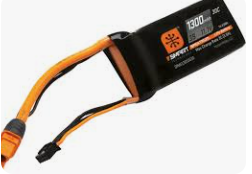
There is a moment most builders remember. The first time a project actually felt alive. Motors spun cleanly, response felt sharp, nothing sagged under load, and for once you did not feel like you were fighting your power source. For a lot of people, that moment arrived when they stopped guessing and landed on 3s lipo batteries.
Not because they are flashy. Not because they promise unrealistic performance. Mostly because they sit right in that sensible middle ground where things start working the way you expected them to all along.
Power without drama. That is the appeal, even if it takes a while to realise.
What “3s” Actually Means, Without The Textbook Talk
The “3S” part simply means three lithium polymer cells wired in series. Each cell sits around 3.7 volts nominal, so together you are looking at roughly 11.1 volts. Fully charged, a bit higher. Under load, a bit lower. Nothing mysterious there.
What matters is how that voltage behaves in the real world. 3s lipo batteries tend to offer enough headroom for motors, ESCs, and controllers to do their job properly without being pushed to their limits. You are not scraping by on minimum voltage, and you are not overfeeding components that were never designed for higher packs.
It is a comfortable operating zone. Engineers like that. Hobbyists eventually do too.
The Sweet Spot Most Builds Quietly Drift Toward
You see 3s lipo batteries everywhere once you start noticing. FPV drones that want smooth throttle instead of twitchy bursts. RC cars that need punch but also control. Robotics projects that run for more than a demo. Even DIY electric systems where reliability matters more than bragging rights.
Why? Because this configuration balances three things that rarely coexist cleanly. Power, efficiency, and manageability.
Higher voltage packs can be impressive, sure. But they amplify mistakes. Heat, stress, noise, and cost all rise together. Lower voltage packs feel safe, until you realise you are compensating with higher current, thicker wires, and warm components that never quite relax.
Somewhere in the middle, 3s lipo batteries just… behave.
Current Draw Feels Calmer, And That Matters
One thing that often gets missed in early builds is current stress. Voltage gets all the attention, while amps quietly do the damage. With 3s lipo batteries, many systems pull less current for the same power output compared to lower voltage setups.
Lower current means less heat in wires and connectors. Less voltage sag under load. Less wear on ESCs. Less of that faint smell that makes you stop mid-run and start checking temperatures.
It also means tuning becomes easier. Throttle curves feel predictable. Response stays consistent instead of collapsing near the end of a run. Over time, that stability adds up.
Runtime Is Not Just About Capacity Numbers
People often chase milliamp-hours without thinking about how voltage affects usable energy. A 3S pack delivers more watt-hours than a comparable 2S pack at the same capacity. That translates to longer, steadier runtimes when the system is designed for it.
This is where 3s lipo batteries quietly win. You are not constantly hitting voltage alarms early in the run. You are not nursing the last minute of operation. The pack spends more time in its efficient range, which also helps longevity.
And yes, longevity matters when you stop treating batteries as disposable.
Compatibility Keeps Life Simple
Another reason 3s lipo batteries became so common is ecosystem compatibility. Chargers support them easily. ESCs are often rated with 3S as a baseline. Motors are frequently optimised around that voltage. Even balance leads, connectors, and safety gear feel standardised here.
That means fewer workarounds. Fewer “temporary” fixes that become permanent. Fewer late-night forum searches trying to confirm whether a component will survive.
For guest builds, shared projects, or client-facing work, that predictability is gold.
They Reward Good Habits, Not Reckless Ones
There is a subtle behavioural benefit too. 3s lipo batteries encourage respect without demanding fear. They are powerful enough to cause damage if abused, but forgiving enough to survive learning curves when handled properly.
Builders tend to store them correctly. Balance charge more consistently. Monitor cell health instead of ignoring it. Those habits carry forward, even if someone later moves to higher cell counts.
In that sense, 3S packs often teach better discipline than either extreme.
Weight And Size Still Make Sense
Once you move beyond 3S, weight climbs fast. Frame stress increases. Crash damage escalates. On the other end, lower voltage packs sometimes require larger capacities to compensate, which brings weight right back.
3s lipo batteries land in a range where energy density feels efficient instead of compromised. Enough capacity to matter, light enough to keep dynamics predictable. That balance shows up in handling, not just specs.
And handling, in the end, is what makes projects enjoyable rather than exhausting.
Not The Most Exciting Choice, And That Is The Point
No one brags about choosing 3s lipo batteries. They just work. They rarely dominate spec sheets or marketing copy. But they show up in successful builds again and again, quietly doing their job.
There is something reassuring about that. About choosing a component because it has proven itself in thousands of real setups, not because it looks impressive on paper.
If you are building something meant to last, to be used rather than admired, that counts.
Final Thoughts, Slightly Unfinished On Purpose
At some point, most builders circle back. After experimenting, after pushing limits, after replacing a few scorched connectors. They land on 3s lipo batteries from RC Battery again, not because they lack ambition, but because they have learned where balance lives.
Power that behaves. Systems that stay cool. Projects that feel cooperative instead of fragile.
Not glamorous. Just solid. And sometimes, that is exactly what a build needs.