Introduction
Many people search for peruvian food but feel confused about where to start. Is it spicy? Is it seafood-based? What are the must-try dishes? The problem is that Peruvian cuisine is incredibly diverse, influenced by Indigenous, Spanish, African, Chinese, and Japanese cultures. Without a clear guide, it can feel overwhelming.
The solution is simple: understand the foundations of traditional Peruvian food, explore a few classic dishes, and learn how flavors come together. This guide explains what Peruvian food is, highlights famous meals, and even points you toward authentic dining experiences.
What Is Peruvian Food?
Peruvian food is a rich culinary tradition shaped by geography and history. Peru has three major regions:
- The Coast
- The Andes Mountains
- The Amazon Rainforest
Each region contributes unique ingredients and cooking styles.
At its core, what is Peruvian food? It is a fusion cuisine that blends:
- Indigenous Andean ingredients like potatoes, corn, and quinoa
- Spanish colonial cooking techniques
- African flavors
- Chinese-Peruvian (Chifa) influence
- Japanese-Peruvian (Nikkei) cuisine
This combination creates bold flavors, fresh ingredients, and balanced spice levels.
Traditional Peruvian Food Staples
To truly understand traditional Peruvian food, you must know its key ingredients:
- Aji peppers (especially aji amarillo)
- Potatoes (Peru has thousands of varieties)
- Fresh seafood
- Corn (large-kernel Peruvian corn)
- Quinoa
- Lime
These ingredients appear repeatedly in many classic dishes.
Classic Peruvian Food You Must Try
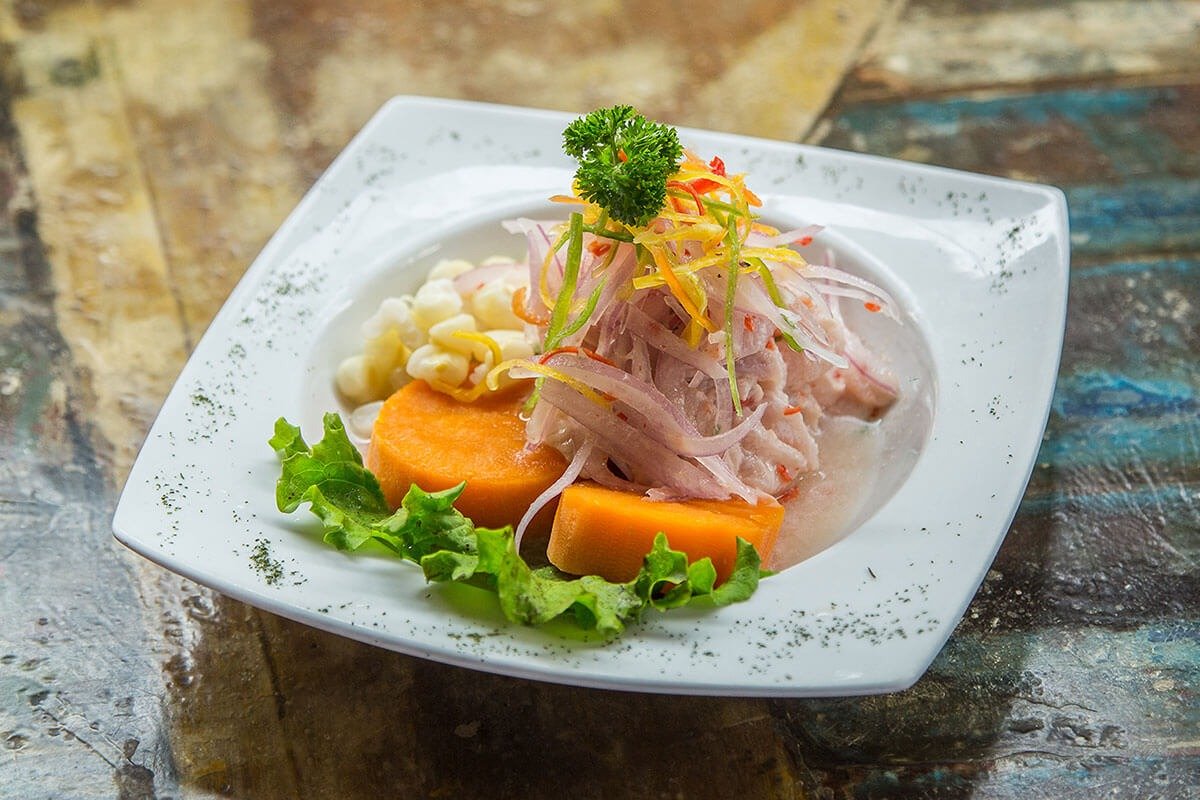
Ceviche
Ceviche is Peru’s national dish. It consists of fresh raw fish marinated in lime juice, onions, chili peppers, and cilantro.
Why it’s special:
- Fresh coastal flavor
- Bright citrus taste
- Light but satisfying
It represents the heart of coastal peruvian food culture.
Lomo Saltado
Lomo Saltado is a perfect example of Chinese-Peruvian fusion.
It includes:
- Stir-fried beef
- Tomatoes
- Onions
- Soy sauce
- Served with rice and fries
This dish shows how international influence shaped classic Peruvian food.
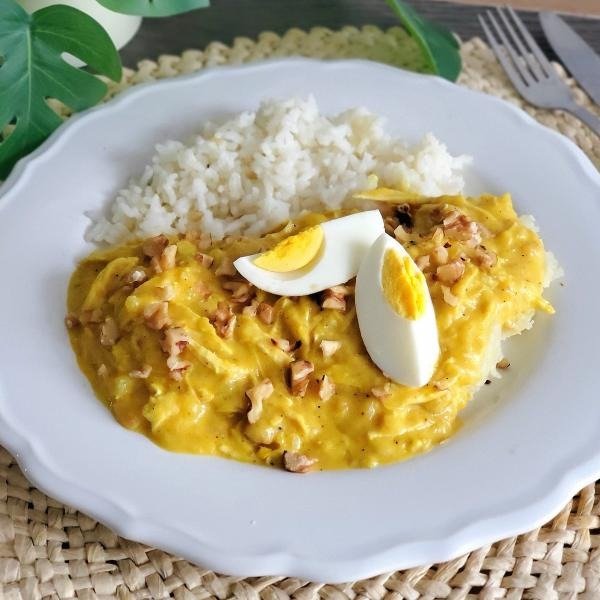
Aji de Gallina
A creamy chicken stew made with:
- Shredded chicken
- Aji amarillo
- Bread-based sauce
- Cheese and milk
It’s comfort food with a mild spicy kick.
Anticuchos
Popular Peruvian street food made from:
- Grilled beef heart skewers
- Marinated in vinegar and spices
Anticuchos highlight Peru’s Indigenous cooking roots.
Peruvian Food Recipes You Can Try at Home
If you want to explore peruvian food recipes, start simple:
Easy Ceviche Recipe (Basic Version)
Ingredients:
- Fresh white fish
- Lime juice
- Red onion
- Aji chili
- Salt and cilantro
Steps:
- Cut fish into cubes.
- Marinate in lime juice for 10–15 minutes.
- Add sliced onions and chili.
- Serve immediately.
Freshness is key in Peruvian cooking.
Simple Lomo Saltado Recipe
Ingredients:
- Beef strips
- Soy sauce
- Tomatoes
- Onions
- Garlic
Cook quickly in high heat to keep flavors intense.
Peruvian Food Restaurants Near Me – How to Find Authentic Places
When searching for peruvian food restaurants near me, look for:
- Menus that list traditional dishes like ceviche and lomo saltado
- Use of authentic ingredients (aji amarillo, cancha corn)
- Reviews mentioning freshness and bold flavor
Major cities worldwide now have authentic Peruvian restaurants because the cuisine is growing globally in popularity.
Why Peruvian Food Is So Popular Worldwide
Peruvian cuisine has gained international recognition because:
- It offers bold yet balanced flavors
- It combines fresh ingredients with comfort food textures
- It represents multicultural history
Global chefs often praise Peru as a top culinary destination.
Regional Differences in Peruvian Food
Coastal Cuisine
- Seafood-based dishes
- Lime-heavy marinades
- Fresh ceviche
Andean Cuisine
- Hearty stews
- Potatoes and grains
- Alpaca meat
Amazonian Cuisine
- Tropical fruits
- River fish
- Exotic flavors
This regional diversity makes peruvian food incredibly unique.
Is Peruvian Food Spicy?
Not necessarily.
While aji peppers are common, spice levels are adjustable. Most dishes focus on flavor rather than extreme heat.
Health Benefits of Peruvian Food
Many traditional dishes are nutritious because they include:
- Lean proteins
- Fresh vegetables
- Whole grains like quinoa
- Minimal processed ingredients
Ceviche, for example, is high in protein and low in fat.
Cultural Importance of Food in Peru
Food in Peru is more than just meals. It is:
- A source of national pride
- A symbol of cultural identity
- A family-centered tradition
Festivals and gatherings often revolve around cooking and sharing dishes.
Frequently Asked Questions (FAQs)
What is Peruvian food known for?
Peruvian food is known for ceviche, bold flavors, and multicultural influences.
Is Peruvian food healthy?
Yes, many dishes use fresh seafood, vegetables, and grains.
What are classic Peruvian food dishes?
Ceviche, lomo saltado, aji de gallina, and anticuchos are classics.
Where can I find Peruvian food restaurants near me?
Search online maps and check reviews for authentic menu items.
Are Peruvian food recipes easy to make?
Many recipes are simple, especially ceviche and stir-fried dishes.
Is Peruvian food spicy?
It can be mildly spicy, but heat levels are usually moderate.
Conclusion
Peruvian food is a rich blend of history, geography, and global influence. From fresh ceviche to hearty Andean stews, the cuisine offers something for everyone. Whether you are trying peruvian food recipes at home or searching for peruvian food restaurants near me, exploring this cuisine is a flavorful journey.
By understanding traditional ingredients and classic dishes, you can fully appreciate why Peru is considered one of the world’s most exciting culinary destinations.